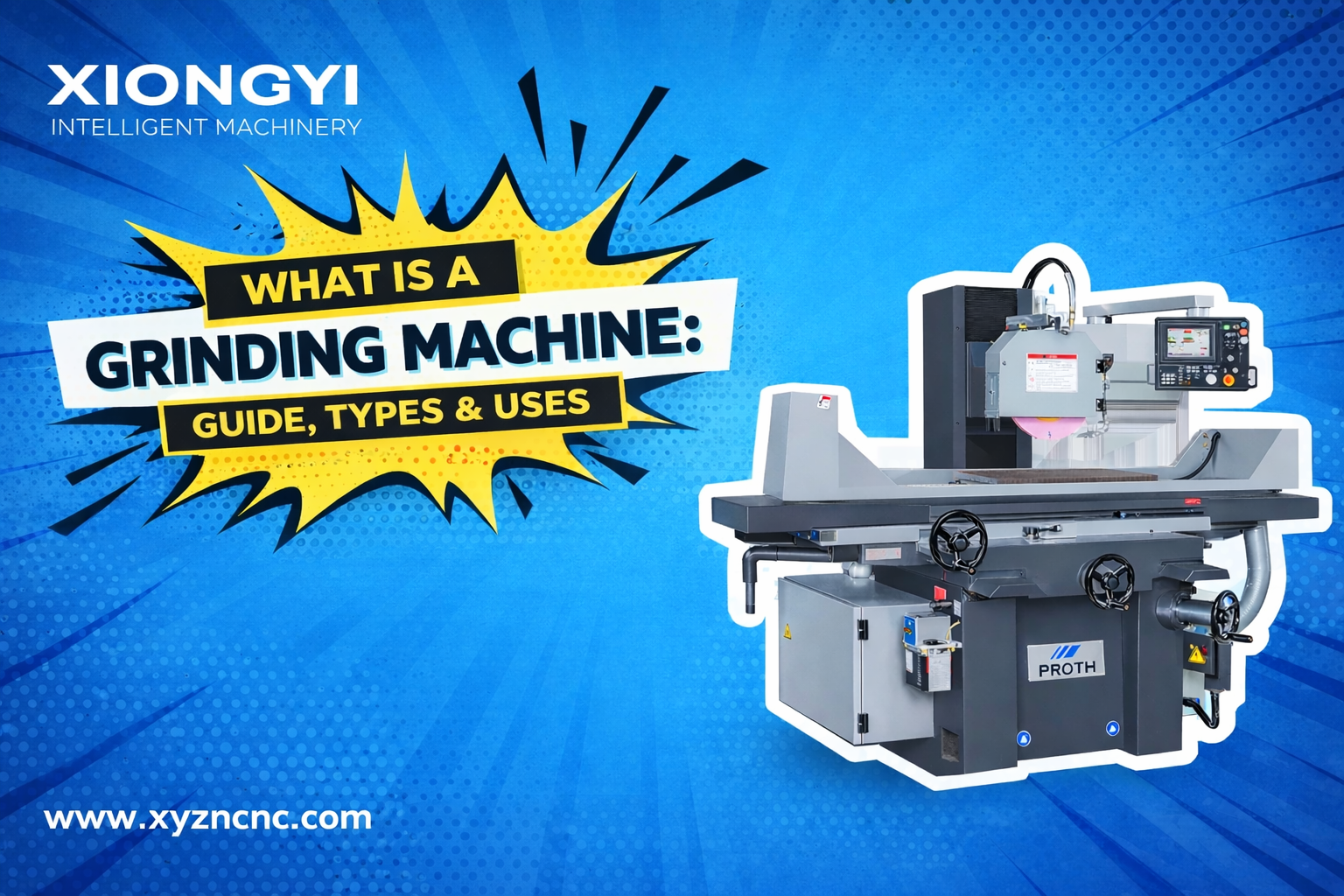
A grinding machine is a precision machining tool used to remove material from a workpiece using a rotating abrasive wheel. Instead of cutting material with sharp edges like a lathe or milling machine, grinding relies on controlled abrasion to achieve extremely tight tolerances and superior surface finishes.
Think of grinding as the final polish in manufacturing. When parts must be accurate down to microns, grinding is the process that makes it happen.
Definition and Purpose of a Grinding Machine
In manufacturing, precision isn’t a luxury—it’s a requirement. Whether you’re producing engine components, aerospace parts, or cutting tools, even the smallest error can lead to big problems. That’s where grinding machines come in.
Grinding machines are typically used in the final stages of production, when accuracy, surface quality, and consistency matter most. Think of grinding as the “polishing touch” that transforms a rough part into a finished masterpiece.
What Is a Grinding Machine?
Simple Definition Explained
At its core, a grinding machine is used to remove material from a workpiece by means of an abrasive action. The abrasive material typically comes in the form of a rotating wheel, which grinds the surface of the workpiece to achieve a high degree of accuracy and smoothness. Grinding machines are an essential part of machining processes and are used in nearly every manufacturing sector—from automotive to aerospace.
How Grinding Differs from Other Machining Processes
Unlike milling or turning:
Grinding removes very small amounts of material
It achieves higher accuracy
It produces a superior surface finish
If machining were cooking, milling would be chopping vegetables, and grinding would be plating the dish perfectly before serving.
Historical Development of Grinding Machines
Early Grinding Techniques
Grinding is not a modern invention. Early civilizations used natural stones to sharpen tools and weapons. These basic grinding methods laid the foundation for what would eventually become precision grinding technology.
Evolution into Modern CNC Grinding
Fast forward to today, and we now have CNC grinding machines capable of:
Technology transformed grinding from a manual skill into a highly automated, data-driven process.
Core Components of a Grinding Machine
Grinding Wheel
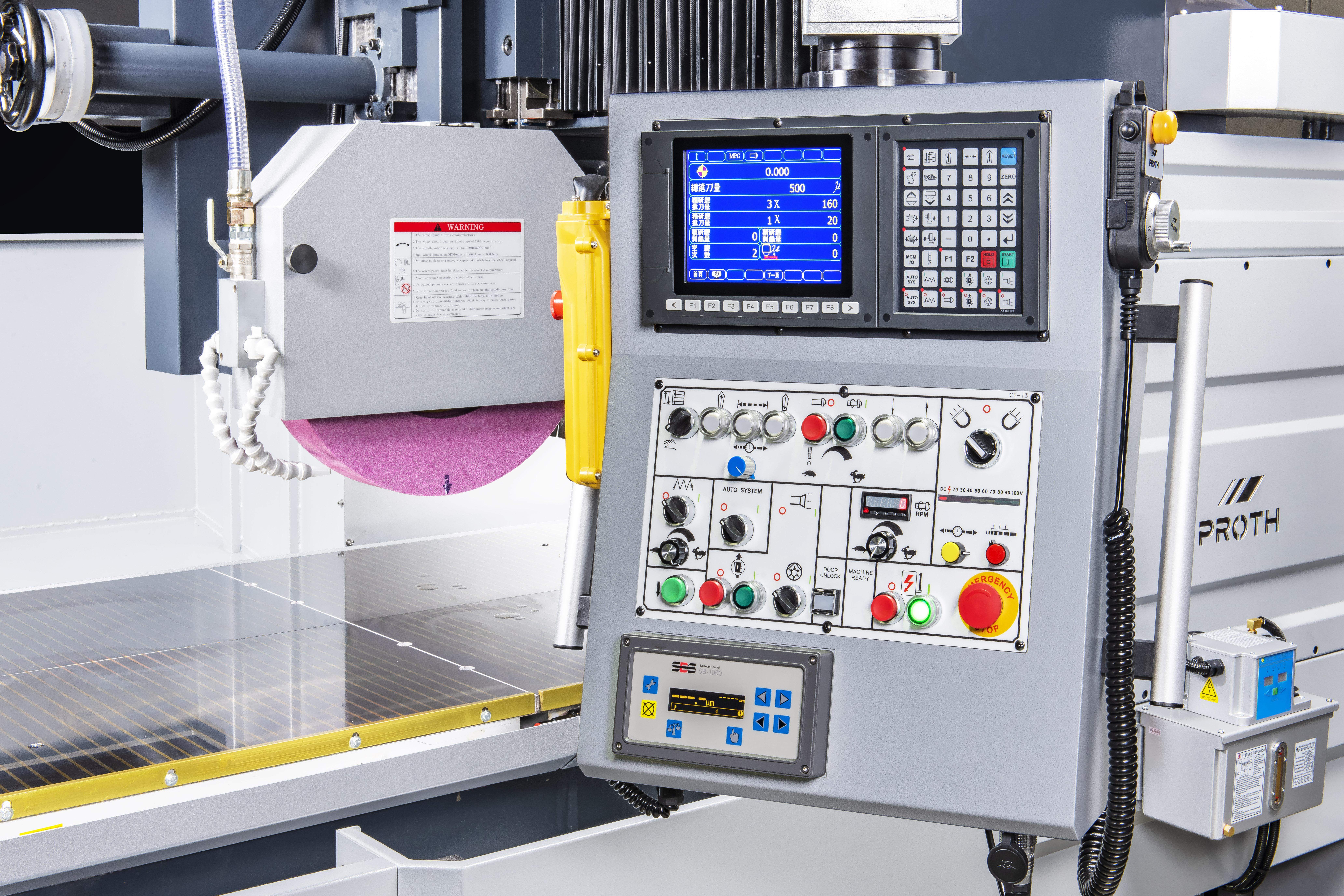
The grinding wheel is the heart of the machine. It consists of abrasive grains bonded together to form a cutting surface.
Types of Abrasive Materials
Aluminum Oxide – for steel
Silicon Carbide – for non-ferrous metals
CBN – for hardened steel
Diamond – for ceramics and ultra-hard materials
Each wheel is selected based on the material and desired finish.
Spindle and Motor System
The spindle rotates the grinding wheel at high speed. Stability and balance here are critical—any vibration can ruin precision.
Workholding Devices
Chucks, magnetic tables, and centers ensure the workpiece stays perfectly positioned during grinding.
Main Purpose of a Grinding Machine
Precision and Accuracy
Grinding machines achieve tolerances as tight as ±0.001 mm, making them essential for high-precision components.
Surface Finish Improvement
Grinding produces smooth, polished surfaces that reduce friction, improve performance, and enhance aesthetics.
Machining Hard Materials
Hardened steels, ceramics, and superalloys are often impossible to machine effectively without grinding.
Advantages of Grinding Machines
Grinding is slow—but when perfection matters, speed is secondary.
Limitations and Challenges
Grinding is precise, not forgiving.
Grinding Machine vs Milling vs Turning
| Process | Best For | Precision |
| Turning | Cylindrical roughing | Medium |
| Milling | Complex shapes | Medium-High |
| Grinding | Final finishing | Very High |
Each has its place—but grinding finishes the job.
Safety Considerations When Using Grinding Machines
Always use wheel guards
Wear eye and face protection
Never exceed wheel speed ratings
Inspect wheels for cracks
Safety isn’t optional—it’s essential.
Future Trends in Grinding Technology
Grinding is getting smarter—and greener.
Conclusion
The definition and purpose of a grinding machine go far beyond simple material removal. Grinding machines are the backbone of precision manufacturing, delivering accuracy, surface quality, and reliability that no other process can match.
In a world where microns matter, grinding machines ensure everything fits, functions, and lasts—perfectly.
How a Grinding Machine Works
Basic Working Principle
The grinding wheel rotates at high speed while the workpiece is fed into contact. Each abrasive grain acts like a tiny cutting edge, removing microscopic chips of material.
Role of Coolant in Grinding
Grinding generates heat—lots of it. Coolant:
Prevents thermal damage
Improves surface finish
Extends wheel life
Without coolant, precision grinding would be nearly impossible.
Role of the Abrasive Wheel
The grinding wheel is composed of:
4 Abrasive grains (aluminum oxide, silicon carbide, CBN, diamond)
4 Bonding material
4 Pore structure for cooling and chip removal
How Abrasive Grains Cut
Each grain acts like a microscopic cutting tool, removing small chips through friction and pressure.
Why Grain Size Matters
Material Removal Mechanism
Grinding removes material through:
Micro-cutting
Micro-fracturing
Rubbing (controlled)
Heat Generation and Control
Grinding produces intense heat due to friction, making cooling systems essential to prevent:
Thermal distortion
Surface burns
Cracking
Importance of Coolant Flow
Proper coolant application:
Reduces heat
Improves surface quality
Extends wheel life
Main Components of a Grinding Machine
A grinding machine’s accuracy depends heavily on the integration of its core components.
Grinding Wheel and Spindle Assembly
This assembly holds and rotates the wheel with minimal vibration.
Spindle Accuracy
High-precision spindles ensure:
Worktable and Feed Mechanism
The worktable supports the workpiece and controls its movement.
Types of Worktables
Manual feed tables
Hydraulic tables
CNC-controlled tables
Why Table Stability Matters
Any vibration or misalignment directly affects surface accuracy.
Cooling and Lubrication System
Coolant systems play a vital role in grinding efficiency.
Types of Coolants
Water-based emulsions
Synthetic coolants
Oil-based coolants
Coolant Delivery Methods
Wheel Dressing and Truing System
Over time, grinding wheels lose sharpness.
Dressing vs Truing
Common Dressing Tools
Control System and CNC Interface
Modern grinding machines rely heavily on CNC control.
Functions of CNC in Grinding
Automatic wheel dressing
Multi-axis interpolation
Precision feed control
Benefits of CNC Grinding
Higher repeatability
Reduced operator error
Increased productivity
Machine Bed and Structural Frame
The foundation of precision.
Materials Used
Cast iron
Polymer concrete
Welded steel
Vibration Dampening
A rigid bed absorbs vibration and maintains alignment over long production runs.
Types of Grinding Machines
Grinding machines are versatile machines that are used in manufacturing processes to grind materials, typically metals, into a desired shape or finish. The type of grinding machine selected depends on the workpiece material, required finish, and grinding operation. Here are the main types of grinding machines:
Surface Grinding Machine
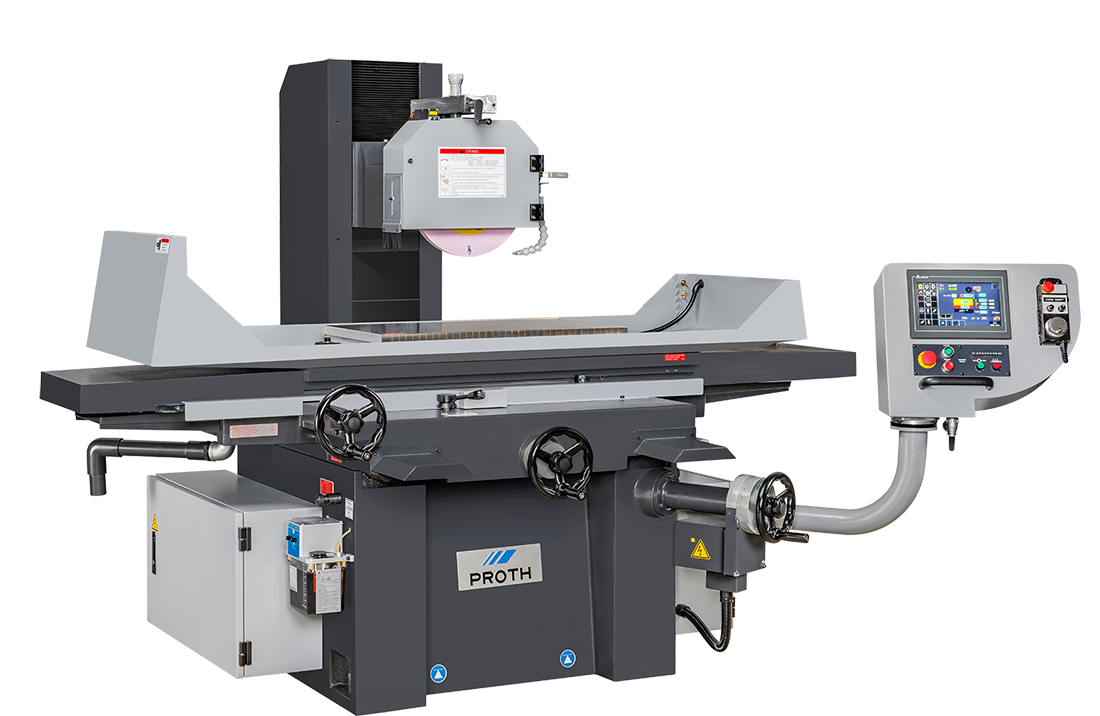
Purpose: Used to produce a flat, smooth surface on a workpiece.
Operation: The workpiece is held on a magnetic chuck, and the grinding wheel moves horizontally across it. The table can move in both directions, allowing the operator to grind the workpiece evenly.
Applications: Common in industries for finishing flat surfaces of metals, plastics, and ceramics.
Types:
Horizontal spindle surface grinders: The grinding wheel is positioned horizontally, and the workpiece moves vertically across the wheel.
Vertical spindle surface grinders: The wheel is positioned vertically, and the table moves horizontally.
2. Cylindrical Grinding Machine
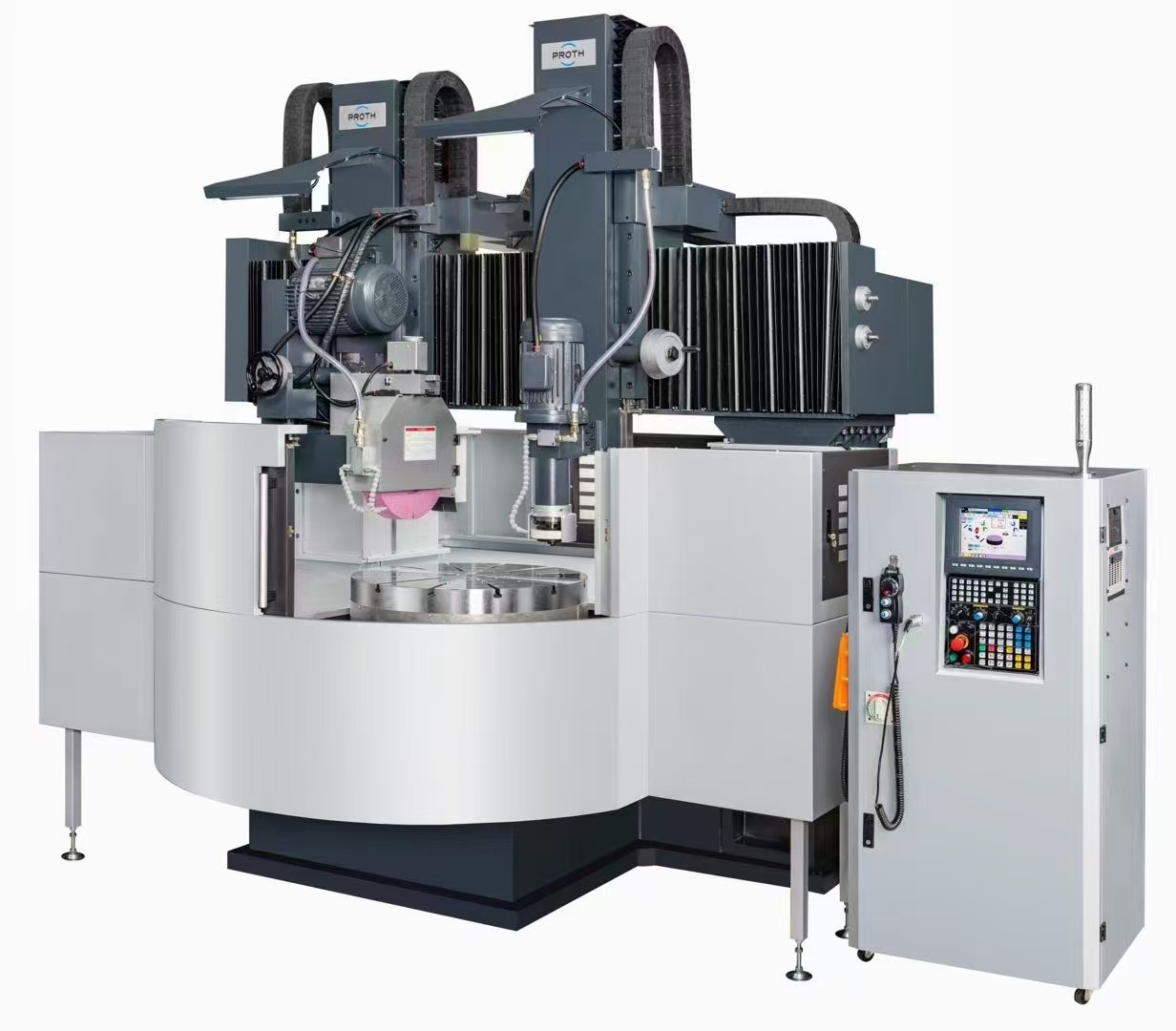
Purpose: Used to grind the outside diameter (OD) and inside diameter (ID) of cylindrical workpieces.
Operation: The workpiece rotates between two centers while the grinding wheel moves along the length of the workpiece. It can perform both external and internal grinding operations.
Applications: Precision grinding of cylindrical parts, shafts, and parts that require roundness and smooth finish.
Types:
3. Centerless Grinding Machine
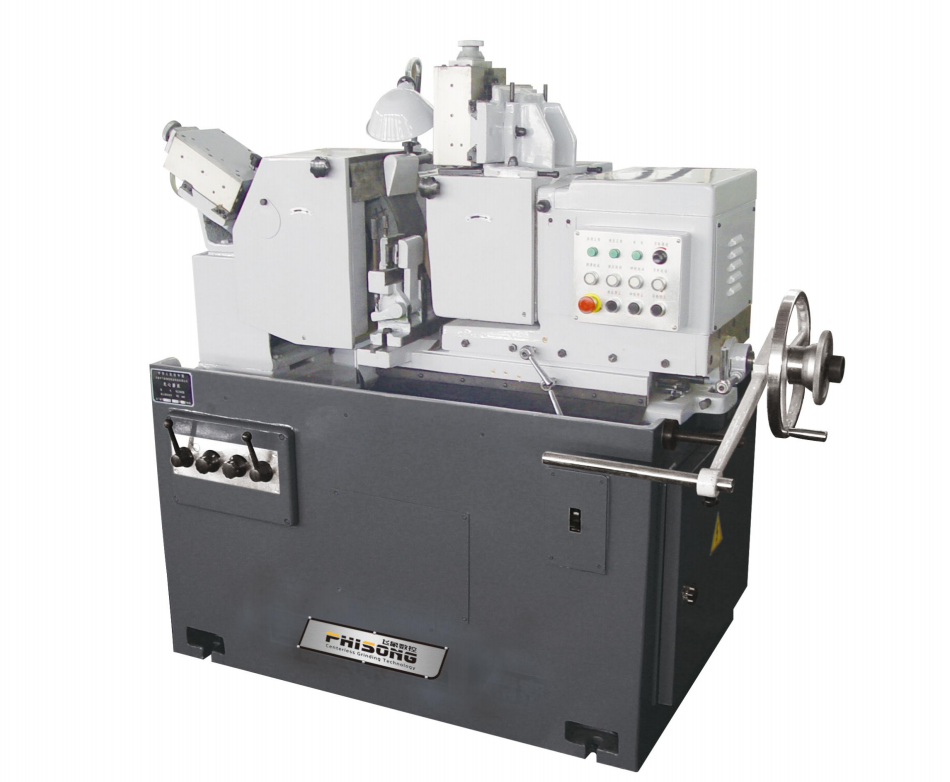
Purpose: Used for grinding cylindrical parts, but without the need for a spindle or centers to hold the workpiece in place.
Operation: The workpiece is held between two rotating wheels (one grinding wheel and one regulating wheel). The regulating wheel controls the feed rate and position, while the grinding wheel performs the cutting action.
Applications: High-volume production of cylindrical parts like rods, shafts, and tubes.
Advantages: Faster production rates, no need for centers to hold workpieces, and more precise control of the workpiece position.
4. Tool and Cutter Grinding Machine
Purpose: Designed to sharpen and shape cutting tools such as drills, milling cutters, and reamers.
Operation: The machine uses a rotating grinding wheel to sharpen the cutting edges of tools. The machine can be configured to grind a variety of tool types.
Applications: Commonly used in tool manufacturing shops to maintain and resharpen cutting tools.
Types:
Universal tool and cutter grinder: Can handle a wide variety of tools and is highly flexible.
CNC tool and cutter grinder: Uses computerized control to automate the grinding process for better accuracy and efficiency.
5. Bench Grinding Machine
Purpose: A small, stationary grinding machine used for light grinding tasks and sharpening of tools.
Operation: The machine typically consists of a motor that drives two grinding wheels, one for coarse grinding and the other for fine grinding.
Applications: Tool sharpening, deburring, and general maintenance tasks.
Advantages: Simple design, low cost, and suitable for small workshop or home use.
6. Gear Grinding Machine
Purpose: Used to grind gears, ensuring smooth teeth profiles and accurate dimensions.
Operation: Gear grinding involves using a grinding wheel with a specially designed profile that matches the gear's teeth shape.
Applications: Primarily used in the automotive industry for manufacturing precision gears, such as transmission gears.
Types:
Straight tooth gear grinding: Grinds gears with straight teeth.
Helical gear grinding: Grinds gears with helical teeth, commonly used in high-performance gear applications.
7. Jig Grinding Machine
Purpose: Used for high-precision grinding tasks, such as the grinding of holes, contours, and slots.
Operation: The workpiece is held on a fixture (jig), and the grinding wheel is used to achieve high accuracy.
Applications: Often used in tool manufacturing and aerospace industries, where precision is paramount.
Features: High-precision, fine adjustment mechanisms, and often used for grinding difficult-to-machine parts.
8. Disc Grinding Machine
Purpose: Utilized for high-precision flat and profile grinding.
Operation: Similar to surface grinding, but with a grinding wheel that is shaped like a disc. It is especially effective for producing flat surfaces or profiles on workpieces.
Applications: Used in finishing operations where high precision and a smooth surface finish are required, such as in the production of high-precision components for automotive and aerospace industries.
9. Polishing and Buffing Machines
Purpose: Used for finishing and polishing surfaces to a high sheen.
Operation: These machines typically use a rotating soft abrasive or cloth wheel that polishes the surface of the workpiece.
Applications: Polishing metal, plastic, or stone surfaces to enhance appearance or improve surface finish.
Distinction: Unlike grinding, polishing machines typically use finer abrasives and slower speeds to achieve a smooth and reflective surface.
10. Hydraulic Grinding Machine
Purpose: A type of cylindrical grinding machine where the grinding wheel is powered by a hydraulic motor.
Operation: The hydraulic system helps to maintain constant speed, reduce vibration, and provide smooth, even grinding action.
Applications: Used in high-precision and high-volume cylindrical grinding operations in manufacturing environments.
Conclusion:
The type of grinding machine selected depends on the material to be ground, the required precision, and the intended finish. From surface grinders to cylindrical and centerless grinders, each machine has specific applications that suit particular workpieces. Understanding these different types helps in choosing the right equipment for a given task in manufacturing and precision work.
You have not enough Humanizer words left. Upgrade your Surfer plan.
Industrial Applications of Grinding Machines
Grinding is critical across high-precision industries.
Automotive Industry
Used for:
Crankshafts
Camshafts
Transmission gears
Aerospace Manufacturing
Grinding ensures:
Tight tolerances
Fatigue resistance
Structural integrity
Medical Device Manufacturing
Surface quality directly affects patient safety.
Medical Components Ground
Surgical tools
Implants
Prosthetics
Mold and Die Industry
Grinding ensures perfect mold surfaces and precise part replication.
Advantages of Grinding Machines
Grinding offers several key benefits over traditional machining.
Superior Surface Finish
Grinding can achieve finishes below Ra 0.2 μm.
Machining of Hard Materials
Grinding easily handles:
Hardened steel
Titanium
Carbides
High Precision and Repeatability
Ideal for mass production of precision parts.
Materials Suitable for Grinding
Grinding machines can process a wide range of materials.
Ferrous Materials
Carbon steel
Tool steel
Cast iron
Non-Ferrous Materials
Aluminum
Copper alloys
Titanium
Advanced Materials
Ceramics
Carbides
Superalloys
How to Choose the Right Grinding Machine
Key factors to consider:
Maintenance
Maintaining a grinding machine properly is crucial for ensuring its performance, longevity, and safety. Here are some general guidelines and best practices for the maintenance of a grinding machine:
1. Daily Maintenance
Clean the machine: At the end of each shift, clean the machine to remove dust, debris, and metal particles. Use an air blower or soft brush to clean the grinding wheel, the table, and other machine components.
Check for leaks: Inspect the hydraulic system (if applicable) and coolant system for any signs of leaks. Make sure that there is no leakage of coolant or oil, as this could affect both performance and safety.
Inspect coolant levels: Ensure the coolant is at the correct level. Coolant helps to reduce heat during the grinding process and ensures smooth operation.
Check for vibrations: Excessive vibrations can affect the accuracy of the grinding machine and lead to premature wear. Ensure the machine is stable and level.
2. Weekly Maintenance
Inspect the grinding wheel: Examine the grinding wheel for wear, cracks, or any other damage. Ensure that the wheel is properly dressed (shaped) to maintain its cutting efficiency.
Wheel balancing: Use a balancing machine or check the wheel’s balance manually to avoid any vibration or chatter during grinding. An unbalanced wheel can cause poor surface finish and excessive wear.
Check the coolant system: Clean the coolant filter to ensure proper flow and that no debris is obstructing the system. Change the coolant if it’s contaminated or has become too viscous.
3. Monthly Maintenance
Check the motor and drive system: Inspect the motor, belts, and drive system for any signs of wear or misalignment. Tighten any loose connections and lubricate components as needed.
Inspect the electrical system: Verify that the electrical wiring and controls are functioning correctly. Look for signs of wear or damage to wires, switches, and buttons.
Lubricate the moving parts: Lubricate the slideways, ball screws, and any other moving parts to reduce friction and ensure smooth motion.
4. Quarterly Maintenance
Check the alignment and level of the machine: Over time, machines can shift out of alignment. Use a leveling tool or a precision instrument to ensure that the machine is aligned correctly, both horizontally and vertically.
Inspect the spindle: The spindle is one of the most critical parts of a grinding machine. Make sure it is not worn and has no runout. Inspect the spindle bearings and ensure they are in good condition.
Check the hydraulic system: If your machine uses hydraulics, inspect the system for any wear or leaks. Ensure the hydraulic fluid is clean and at the correct level.
5. Annual Maintenance
Replace worn parts: Over the course of the year, many parts of the machine will experience wear, including the grinding wheel, belts, and bearings. Replace any worn parts to prevent machine failure.
Inspect the entire system: Have a professional technician check the entire machine, including the electrical and hydraulic systems, the grinding head, and the cooling system.
Calibrate the machine: Perform a thorough calibration to ensure the grinding machine is working with high precision. This may include checking the grinding head alignment, setting proper parameters, and fine-tuning the machine’s controls.
6. Best Practices for Grinding Machine Operation
Use proper grinding wheels: Always use the right type of grinding wheel for the material you're grinding. Ensure that the wheel is mounted correctly, and check it for damage before use.
Dress the grinding wheel: Regularly dress the grinding wheel to keep it sharp and efficient. Dressing helps remove any glazing or loading on the wheel, ensuring consistent performance.
Maintain a consistent feed rate: Maintain a steady and appropriate feed rate during operation to avoid overheating and wear on both the machine and the grinding wheel.
Monitor temperature: Overheating of the grinding wheel or the workpiece can affect the quality of the grind. Use coolant and monitor temperatures regularly to avoid thermal damage.
Always wear safety gear: Grinding machines can generate a lot of sparks, dust, and debris. Operators should always wear appropriate personal protective equipment (PPE), including safety glasses, gloves, and ear protection.
7. General Safety Tips
Before starting work: Always ensure that the machine is properly set up and that the grinding wheel is securely mounted.
Check the workpiece: Make sure the workpiece is securely clamped and properly aligned before starting the grinding process.
Never bypass safety features: Grinding machines often have emergency stop buttons, safety shields, and other safety features. Do not bypass or disable these features.
Conclusion
Regular maintenance, proper operation, and attention to safety are critical for grinding machine performance and longevity. Following these guidelines will help reduce downtime, improve the quality of the grind, and ensure the safety of operators.
Frequently Asked Questions (FAQs)
1. What is the main function of a grinding machine?
To remove material with high precision and achieve superior surface finish.
2. Is grinding suitable for hardened materials?
Yes, grinding is ideal for hardened and difficult-to-machine materials.
3. What industries rely most on grinding machines?
Automotive, aerospace, medical, mold & die, and precision engineering.
4. Why is coolant critical in grinding?
It controls heat, prevents damage, and improves surface quality.
5. Are CNC grinding machines worth the investment?
Yes, they significantly improve accuracy, productivity, and repeatability.


